
Ordering concrete looks like a job closed with a single phone call; yet most of the problems on pour day stem from incomplete information given at the time of ordering. A correct order means settling five things in advance: quantity, class, consistency, access and timing.
1. Quantity: m³ calculation and allowance
Concrete is sold by volume. The calculation is simple — the volume of the element to be poured — but two items are constantly forgotten on site: formwork allowance and ground losses. Formwork bulging, an uneven base and the junctions between elements require slightly more concrete than the theoretical volume.
- Slab: area × thickness. Thickness is verified by measuring on site.
- Shear walls and columns: section area × height × count.
- Foundation: blinding and raft are calculated separately.
Too little concrete means a cold joint in the middle of the pour; too much is wasted. Checking the quantity together in advance is the cheapest step — you can get approximate figures from our concrete calculator.
2. Class and exposure: check the design
The concrete class (C25/30, C30/37 and so on) is set in the structural design; it is not something to decide over the phone. The second heading, as important as the class, is the exposure class: the building’s proximity to the sea, the chemistry of the groundwater and freeze–thaw conditions directly affect the mix.
In buildings near the coast, chloride attack is the main cause of reinforcement corrosion. On such jobs a low water/cement ratio and adequate cover are as decisive as the strength class.
3. Consistency (slump): pump or chute?
The slump value describes the flowability of the concrete. High slump places easily but must not be achieved by arbitrarily adding water — adding water permanently lowers strength. The right consistency is set at the plant through admixtures and mix design.
- If the pour is by pump, the consistency is planned accordingly.
- Densely reinforced elements need a more flowable mix.
- On sloping surfaces, overly flowable concrete runs; the consistency is reduced.
Do not add water on site. If there is a consistency problem, the solution comes from the plant.
4. Access: the route the truck will take
This is the heading that wastes the most time because it is not discussed when ordering:
- The width, gradient and turning radius of the road determine whether the mixer truck can get in.
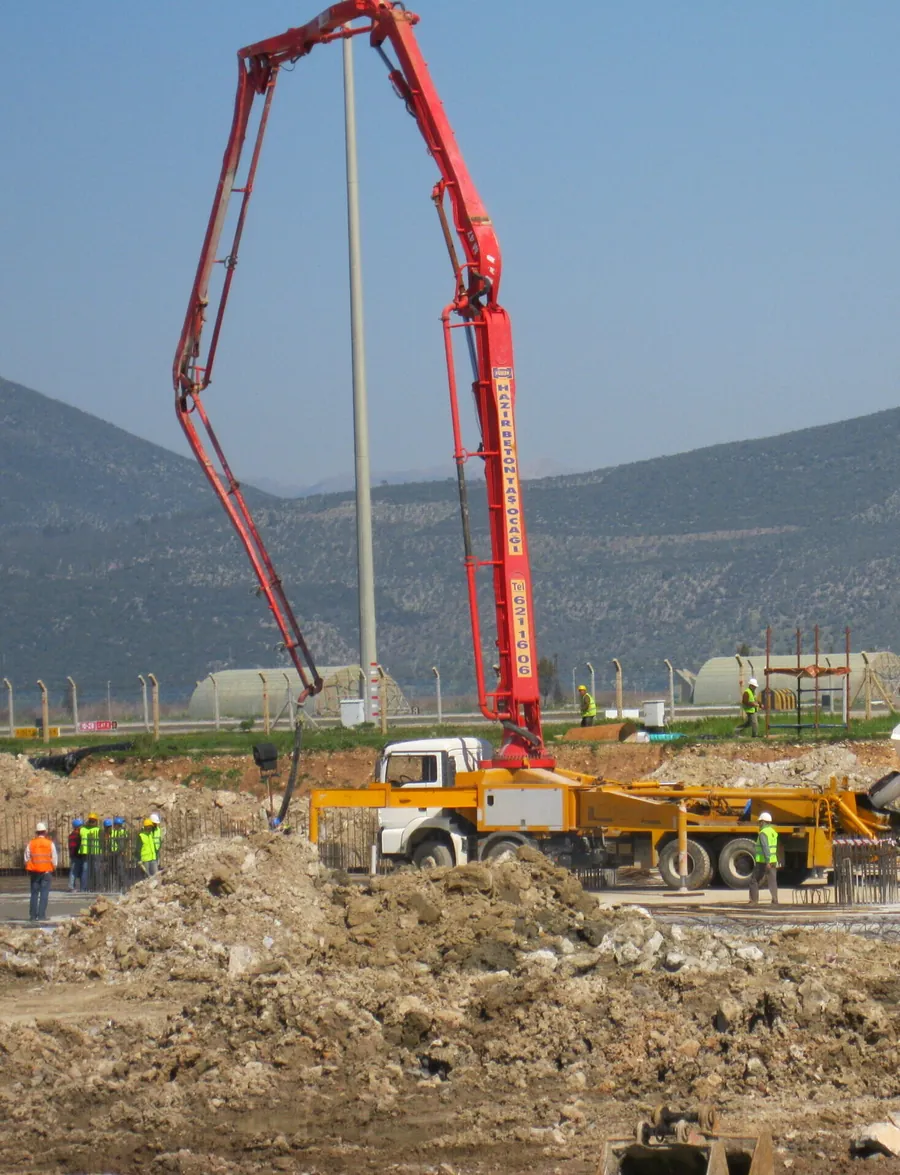
- The area where the pump is set up must be level and firm; space is left for the outriggers.
- Overhead power lines restrict the reach of a boom pump.
- A mobile pump is preferred on a narrow plot, a boom pump over long distances.
On sites with uncertain access, a survey before the pour is cheaper than waiting on pour day.
5. Pour day: sequence and timing
Concrete races against time from the moment it leaves the plant. In hot weather that time is shorter. The pour plan must answer three questions: how many trucks, at what interval, in what order?
- Formwork, reinforcement and services are checked before pour day.
- Vibrators and spare equipment are kept ready on site.
- If samples are to be taken (for quality records), this is planned in advance.
- Curing materials must be on site before the pour ends.
After the pour, curing is essential for the concrete to reach its design strength; we cover this in detail in our concrete curing article.
Frequently asked questions
How many days in advance should concrete be ordered?
It depends on seasonal demand and the size of the pour. As regional demand rises in the summer months, date and time should be confirmed early; for large pours the vehicle plan is made in advance.
Can water be added to the concrete on site?
It should not be. Adding water upsets the water/cement ratio and permanently lowers strength. Consistency requirements are met at the plant through mix design.
Is a pump needed, or is the chute enough?
The distance from the truck to the pour point, the level difference and the element type are decisive. Where the truck can get close and free discharge is possible, the chute may be enough; otherwise a pump is needed.
Can I choose the concrete class myself?
The class is specified in the building’s structural design. Departing from the design directly affects structural safety; the choice is an engineering decision.
Related articles
Choosing a Concrete Pump: Boom, Line Pump and the Access Plan

Formwork Striking Times: When to Strike, and the Risk of Early Loading

Industrial Floor Concrete: Hardener, Joints and Flatness
Concrete Cracks: Types, Causes and Ways to Prevent Them
Concrete Consistency Classes: The Slump Test, S1-S5 and Pump Concrete
Pouring Concrete in Winter: Cold-Weather Precautions and Freezing Risk
Water/Cement Ratio: Why Does Excess Water Weaken Concrete?
What Is Concrete Curing? A Guide to Hot-Weather Pouring and Curing
Need concrete for your project?
Contact our sales team for mix design, delivery planning and a price quote. Fast delivery from our Milas / Muğla plants to the Bodrum, Milas, Ören and Güllük line.