
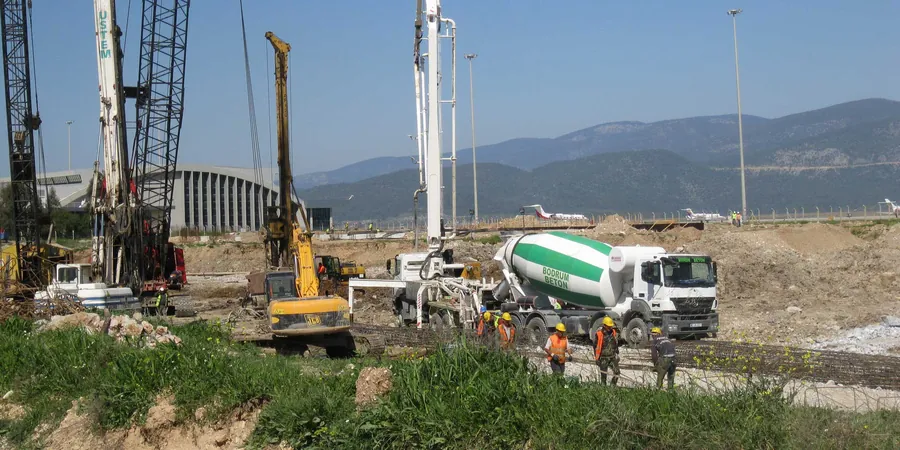
Concrete reaches its design strength not when it is poured but when its curing is complete. Curing means keeping the water inside the concrete long enough for hydration. In Bodrum’s summer heat and wind, that water escapes from the surface within hours.
What curing is, and what it is not
Curing is not about keeping the concrete wet; it is about preventing it from losing its water. The reaction of cement with water is a process that takes days. If the concrete dries out during that time, the reaction stops and that strength is never regained.
The most common mistake is to confuse the hardening of concrete with its drying. Being able to walk on the surface does not mean that curing is over.
Pouring in hot weather: three risks
- Rapid setting. Hot concrete stiffens faster; the time for placing and screeding is shorter.
- Plastic shrinkage cracks. When evaporation from the surface exceeds the bleeding rate of the concrete, the surface shrinks and fine cracks form. Wind increases this effect more than heat does.
- Water loss. A surface left uncured dusts and its abrasion resistance drops.
The common remedy for all three risks is the same: schedule the pour for the cool hours of the day, do not let the concrete wait, and start curing as soon as the pour is finished.
Curing methods
- Water curing. Keeping the surface continuously moist. The most effective method; it must be uninterrupted — a surface that wets and dries cracks.
- Curing by covering. Preventing evaporation with damp sacking, hessian or plastic sheeting.
- Curing compound (membrane). Products sprayed onto the surface to form a film; preferred on sites where water spraying is not possible.
- Leaving the formwork in place. In vertical elements, not striking the formwork early is also a form of curing.
How long should curing last?
The duration depends on the cement type, air temperature, element thickness and target strength. It is generally accepted that the first days are decisive: curing in the first days after the pour cannot be made up for by anything done in the following weeks.
In hot, windy weather, curing starts earlier and is repeated more often. On critical jobs the curing plan should be put in writing as part of the pour plan.
Site checklist
- Are the curing materials and water supply on site before the pour starts?
- Does the pour time fall in the hottest part of the day?
- Is a windbreak needed?
- Was curing started immediately after the surface was screeded?
- Is the formwork striking time consistent with the curing period?
- If samples were taken, are they also being kept under curing conditions?
Frequently asked questions
How many days after pouring can work continue on the concrete?
Being walkable and being able to carry load are two different things. Formwork striking and loading times are determined by the design, cement type and weather conditions.
What happens if concrete is not cured?
The concrete does not reach its design strength; the surface dusts, abrasion resistance drops and shrinkage cracks form. Lost strength cannot be recovered later.
Does the time of the pour matter in hot weather?
Yes. Pouring in the hottest hours of the day shortens the placing time and increases evaporation. Early morning or the cool of the evening is preferred.
Do fine surface cracks affect the structure?
Plastic shrinkage cracks are mostly superficial and not structural, but they are undesirable in terms of abrasion and water permeability. An engineer’s opinion should be sought for deep or progressing cracks.
Related articles
Choosing a Concrete Pump: Boom, Line Pump and the Access Plan
Formwork Striking Times: When to Strike, and the Risk of Early Loading
Industrial Floor Concrete: Hardener, Joints and Flatness
Concrete Cracks: Types, Causes and Ways to Prevent Them
Concrete Consistency Classes: The Slump Test, S1-S5 and Pump Concrete
Pouring Concrete in Winter: Cold-Weather Precautions and Freezing Risk
Water/Cement Ratio: Why Does Excess Water Weaken Concrete?
How to Order Concrete: m³ Calculation, Pump Selection and Pour Day
Need concrete for your project?
Contact our sales team for mix design, delivery planning and a price quote. Fast delivery from our Milas / Muğla plants to the Bodrum, Milas, Ören and Güllük line.